
Introduction
If your baby suddenly becomes fussy, cries intensely, and refuses to sleep, there’s a good chance you’re dealing with overtiredness. This is one of the most common challenges parents face, yet it’s often misunderstood.
As a baby sleep specialist with over 20 years of experience, I can tell you this: an overtired baby doesn’t just need sleep—they need the right approach to calm their body and mind.
In this guide, you’ll learn how to quickly soothe an overtired baby and prevent it from happening again.
What Does “Overtired” Mean?
An overtired baby is a baby who has stayed awake longer than their body can handle. When this happens, their system releases stress hormones like cortisol and adrenaline.
Instead of becoming sleepy, your baby may cry more than usual, arch their back, fight sleep, wake up frequently, and become harder to soothe.
This creates a cycle where the more tired they are, the harder it becomes for them to fall asleep.
Signs Your Baby Is Overtired
Recognizing the signs early can make a huge difference. Look for red eyebrows or eyelids, rubbing eyes or ears, repeated yawning, sudden fussiness, and difficulty settling down.
If you miss these early cues, your baby may move into a more intense overtired state, making calming them more difficult.
Why Overtired Babies Struggle to Sleep
Many parents assume that keeping a baby awake longer will make them sleep better. In reality, the opposite is true.
When babies become overtired, their nervous system becomes overstimulated, stress hormones increase, and sleep becomes lighter and more fragmented.
This is why an overtired baby often wakes more during the night.
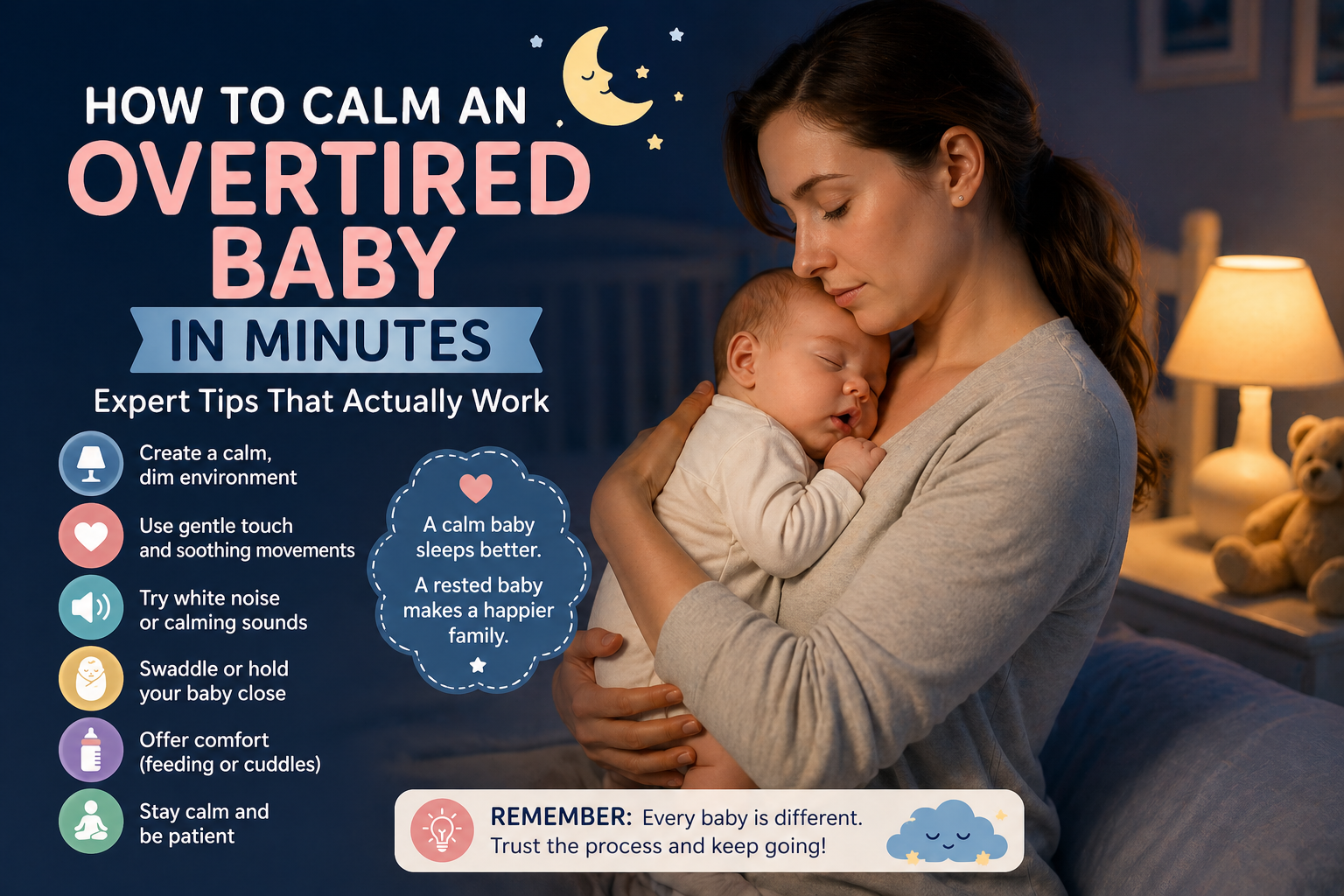
How to Calm an Overtired Baby Quickly
The goal is to reduce stimulation and help your baby feel safe and relaxed again.
Go to a quiet, dim environment as soon as possible. Reducing noise and light helps lower sensory overload and signals that it’s time to rest.
Use gentle, repetitive movements such as rocking or swaying. Slow and consistent motion helps regulate your baby’s nervous system.
Try skin-to-skin contact. This can regulate your baby’s heart rate, breathing, and temperature, making them feel secure.
Offer a feeding if appropriate. Feeding can provide comfort, but it’s best not to rely on it every time as the only sleep method.
Use white noise to create a calming and consistent background sound that mimics the womb.
If your baby is young, swaddling can help provide a sense of security and prevent sudden movements.
Most importantly, stay calm. Babies can sense stress, and your calm presence helps them settle more easily.
Preventing Overtiredness
Prevention is always easier than trying to fix overtiredness later.
Watch wake windows carefully. Newborns typically stay awake for 45 to 90 minutes, babies between 3 and 6 months for about 1.5 to 2.5 hours, and older babies for around 2 to 3 hours.
Follow a consistent routine so your baby learns when it’s time to sleep.
Learn your baby’s unique sleep cues. Acting early makes a big difference.
Avoid skipping naps, as missed naps often lead to overtiredness and more difficult nights.
Common Mistakes to Avoid
Keeping your baby awake too long, overstimulating before bedtime, waiting for intense crying before acting, and changing routines frequently are all common mistakes that can worsen sleep issues.
Small adjustments can prevent bigger problems.
When to Seek Help
If your baby is constantly overtired, has extreme difficulty sleeping, or shows unusual behavior, it may be helpful to consult a pediatrician or a sleep specialist.
Final Thoughts
Calming an overtired baby isn’t about doing more—it’s about doing the right things in a calm and consistent way.
By recognizing the signs early, creating a soothing environment, and following age-appropriate routines, you can help your baby relax and fall asleep more easily.
Better sleep doesn’t happen overnight, but with patience and consistency, it absolutely improves for both you and your baby.